

Many people encounter a common problem when using a swim spa tub: even if the water looks clean and clear, it's not necessarily "smooth." If your skin feels rough, dry, or even slightly stinging when it comes into contact with the water, it indicates a problem with water hardness or chemical balance.
Making the water in your swim spa tub smooth not only improves bathing comfort but also extends the lifespan of the device and reduces the consumption of chemical agents. This article will systematically explain how to scientifically adjust the water quality to achieve a "silky smooth" feel in your swim spa tub.
Why Does Swim Spa Tub Water Become "Hard"?
Before understanding how to make the water smooth, it's essential to understand why water becomes "hard." "Hard water" refers to water containing a high concentration of calcium (Ca²⁺) and magnesium (Mg²⁺) ions. These ions combine with fatty acids in soaps or skincare products to form precipitates, making the water feel rough.
For swim spa tubs, hard water not only affects the experience but also causes the following problems:
• Reduced heating efficiency: Calcium and magnesium deposits form scale on the heating element, reducing heat transfer efficiency.
• Nozzle clogging: Mineral crystals adhere to the nozzles or circulation system, affecting water flow.
• Skin irritation: Hard water can easily cause dry, itchy skin, reducing the relaxing effect of a spa treatment.
Therefore, to make the water in a swim spa tub smoother, the key is to reduce water hardness, balance the pH level, and optimize the structure of dissolved substances.
How to test the water hardness in a swim spa tub?
To improve water smoothness, the first step is testing. Whether for a home use or a commercial establishment, the following indicators should be tested regularly:
• Total Hardness: Reflects the total amount of calcium and magnesium ions in the water. The ideal range is typically between 100–250 ppm.
• pH level: Determines the acid-base balance of the water. Excessive acidity or alkalinity will make the water feel astringent; the optimal range is 7.2–7.6.
• Alkalinity: Alkalinity buffers pH fluctuations; it is recommended to maintain it between 80–120 ppm.
• Total Dissolved Solids (TDS): This represents the concentration of impurities in the water. Excessive TDS can cause the water to become cloudy and mushy. Ideally, TDS should be below 1500 ppm.
These parameters can be easily measured at home using water quality test strips or electronic meters. Addressing the specific issues based on the results is key to truly achieving smooth and comfortable water in your swim spa tub.
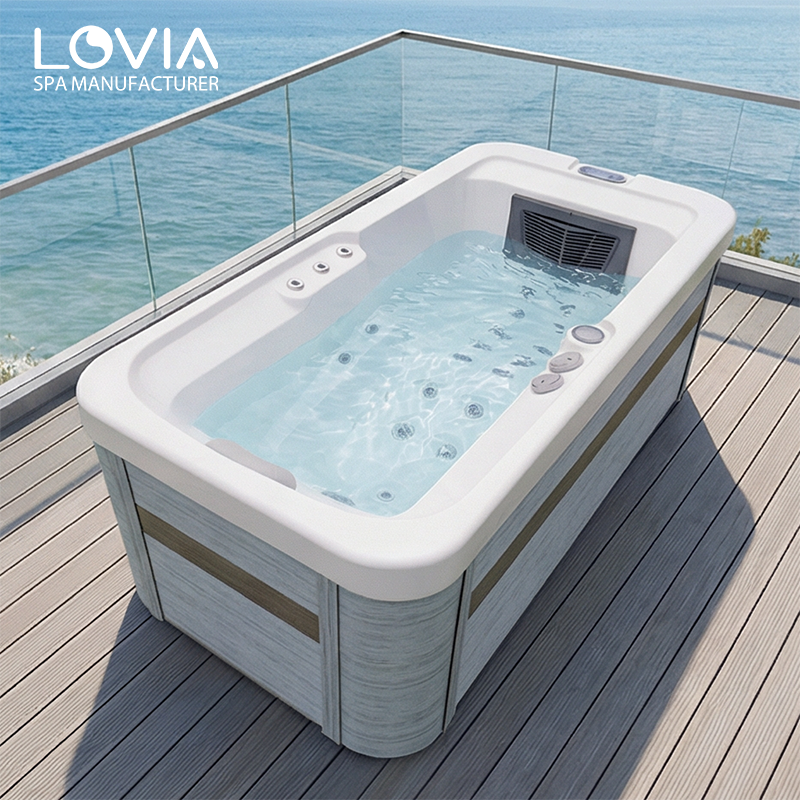
How to make water silky smooth through softening?
1. Use a water softener or ion exchange system
The most effective way to soften water is by installing a water softener. Water softeners use ion exchange resins to replace calcium and magnesium ions in the water with sodium ions, thus reducing water hardness.
For households that frequently use a swim spa tub, it is recommended to install a water softener on the inlet pipe to ensure that every fill is softened. This not only improves the feel of the water but also prevents scale buildup on the heating element.
2. Add a professional water softener
There are various water softeners on the market specifically designed for swim spa tubs. These products can quickly neutralize calcium and magnesium ions.
Precautions when using:
• Add according to the instructions; do not overdose.
• Retest the hardness and adjust after each water change.
• Avoid direct mixing with chlorine or bromine disinfectants.
3. Regularly change part of the bathwater
Even with a water softener system, prolonged circulation will cause minerals to gradually accumulate in the water. It is recommended to change 30%-50% of the water every 1-2 months to maintain the smoothness and clarity of the swim spa tub.
Does pH imbalance affect smoothness?
Yes. The pH value of the water directly determines the feel on the skin.
• pH too high (>8.0): The water will be alkaline, causing dry skin.
• pH too low (<7.0): The water will be acidic, easily irritating the eyes and skin.
Maintaining the pH of your swim spa tub between 7.2 and 7.6 is key to achieving a smooth feel.
Adjustment methods include:
• Fine-tuning with pH minus or pH plus;
• Checking weekly, especially after frequent use or adding water;
• Avoiding the simultaneous use of multiple chemical regulators to prevent reactions.
A balanced pH environment not only makes the water smoother but also improves the effectiveness of disinfectants and reduces skin irritation.
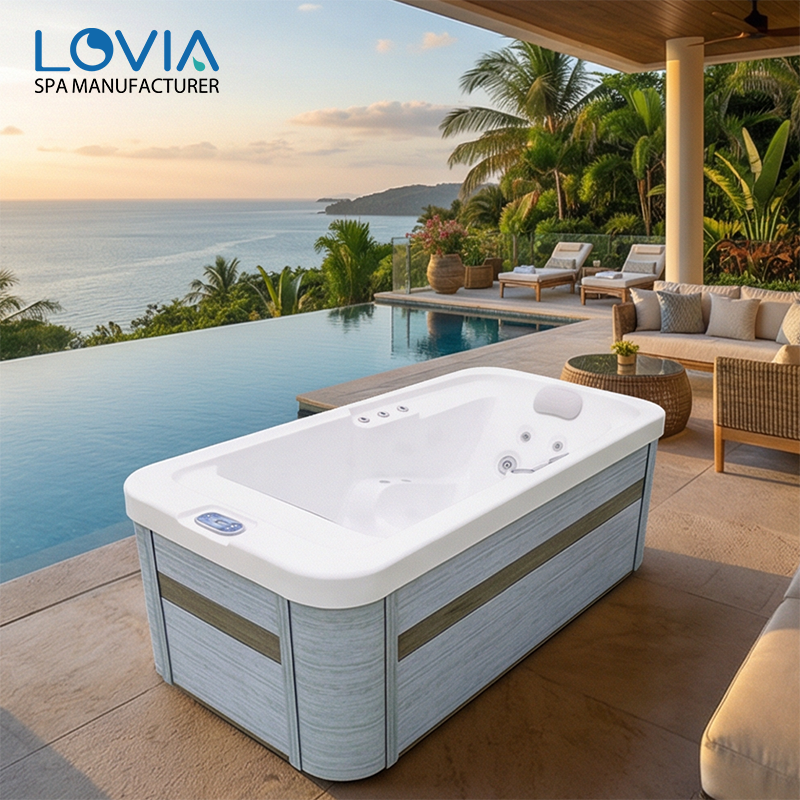
Which minerals make the water smoother?
Interestingly, the water in a swim spa tub isn't necessarily better the "purer" it is. Completely deionized water can feel "slippery but unnatural" and may even be slightly corrosive to metal parts.
Appropriate amounts of mineral ions can enhance the "slipperyness" and "thickness" of the water. Common examples include:
• Sodium ions (Na⁺): Soften the water, reduce surface tension, and make it feel silkier on the skin.
• Potassium ions (K⁺): Help moisturize the skin and have a positive effect on nerve relaxation.
• Trace magnesium ions (Mg²⁺): Although a source of hardness, their presence in trace amounts can help relax muscles.
Modern high-end swim spa tub systems even have built-in "mineral salt filtration modules" that simulate the feel of natural hot spring water by controlling the mineral ratio.
Why is a filtration system so important for smooth water quality?
Ang sistema ng pagsasala ang pundasyon para mapanatili ang maayos na kalidad ng tubig sa isang swim spa tub. Kung ang mga microparticle, langis, keratin, at mga kemikal na nalalabi sa tubig ay hindi masasala sa tamang oras, ito ay magdudulot ng mga sumusunod na problema:
• Malabo at malapot na tubig;
• Baradong mga kartutso ng filter, na nagreresulta sa mahinang sirkulasyon;
• Nagiging hindi epektibo ang mga kemikal, kaya mahirap patatagin ang pH.
Ang mga pangunahing punto para sa pag-optimize ng isang sistema ng pagsasala ay kinabibilangan ng:
• Regular na paglilinis ng mga kartutso ng pansala (inirerekomenda kada 2 linggo);
• Pagpapalit ng mga kartutso ng pansala kada 3–6 na buwan;
• Panatilihing maayos ang pagtakbo ng circulation pump, patakbuhin ito nang hindi bababa sa 2–3 oras araw-araw.
Ang malinis at umiikot na daloy ng tubig ay patuloy na nag-aalis ng mga particle, na nagpapanatili sa tubig sa swim spa tub na makinis at malasutla.
Maaari bang mapabuti ang kinis nito sa pamamagitan ng pagsasaayos ng temperatura ng tubig?
Ang temperatura ng tubig ay talagang nakakaapekto sa kung ano ang pakiramdam ng tubig sa balat.
Sa pangkalahatan, ang pinakamainam na saklaw ng temperatura para sa isang swim spa tub ay 35°C–38°C.
Kapag masyadong mababa ang temperatura, tumataas ang surface tension ng tubig, na nagpaparamdam dito na magaspang; kapag masyadong mataas ang temperatura, mas maraming tubig ang sumisingaw, na nagiging sanhi ng pagkatuyo.
Ang pagpapanatili ng matatag na temperatura sa isang thermostatically controlled spa tub ay nagpapakinabang sa kinis nito at nakakatulong din sa pagpapabilis ng sirkulasyon ng dugo at pag-ibsan ng tensyon ng kalamnan.
Mas nagiging makinis ba ang tubig kapag nagdagdag ng bath salts o mineral crystals?
Ang pagdaragdag ng angkop na dami ng de-kalidad na mineral salts na mula sa spa ay maaaring makapagpapalambot ng tubig, ngunit mahalagang malaman ang pagkakaiba sa pagitan ng "regular bath salts" at "swim spa tub-specific salts."
Ang mga huli ay karaniwang ginagamot upang maiwasan ang pag-alis ng dumi at hindi makapinsala sa sistema ng pagsasala. Ang mga rekomendasyon sa paggamit ay ang mga sumusunod:
• Magdagdag ng humigit-kumulang 200–400 gramo bawat tonelada ng tubig;
• Tunawin nang lubusan bago buksan ang spray function;
• Iwasan ang paggamit ng mga produktong naglalaman ng labis na langis o halimuyak.
Kayang pinuhin ng mga mineral na asin na ito ang balanse ng ion, bawasan ang epekto ng matigas na tubig, at bigyan angpaliguan para sa paglangoymas maayos na pakiramdam at parang spa na karanasan.
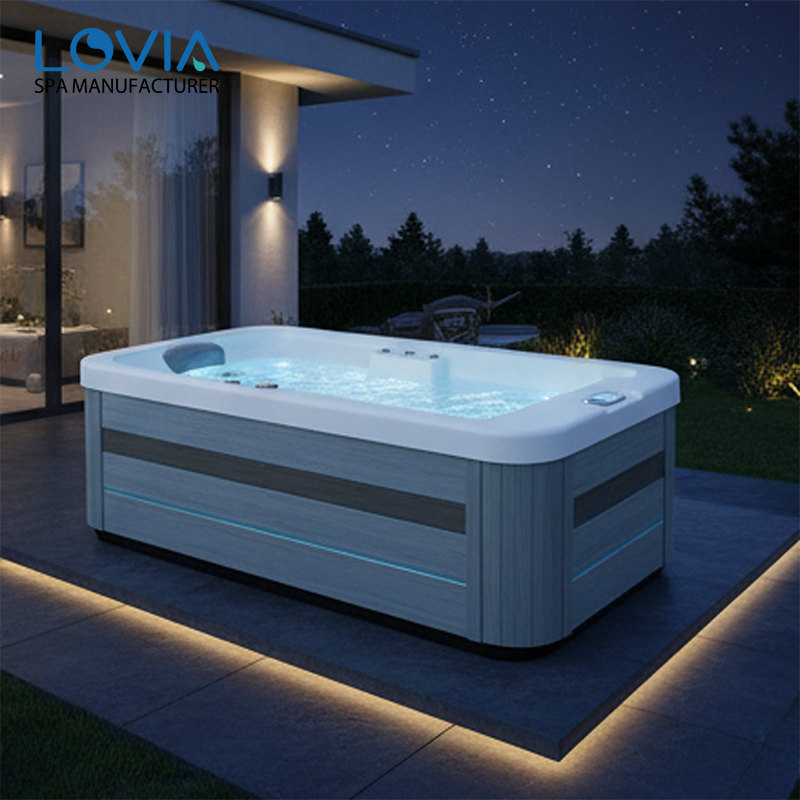
Paano mapanatili ang kalinisan ng tubig sa pamamagitan ng pang-araw-araw na pagpapanatili?
• Subukan ang mga parametro ng kalidad ng tubig (katigasan, pH, TDS) linggu-linggo;
• Linisin nang regular ang pansala at mga nozzle;
• Kontrolin ang dalas ng paggamit: Kinakailangan ang bahagyang pagpapalit ng tubig pagkatapos ng patuloy na paggamit;
• Panatilihing nakasara ang takip upang maiwasan ang pagpasok ng alikabok at polen;
• Iwasan ang labis na kemikal: Ang mga nalalabing kemikal ay maaaring magdulot ng astringent sa tubig.
Sa pamamagitan ng pagtatatag ng isang matatag na siklo ng pagpapanatili, mapapanatili mo ang maayos na kalidad ng tubig ng iyong swim spa tub sa mahabang panahon.
Paano gawing makinis ang tubig sa iyong swim spa tub?
Para maging maayos ang tubig sa isang swimming spa tub, tatlong pangunahing aspeto ang mahalaga:
1. Siyentipikong inaayos ang katigasan at mga antas ng pH;
2. Pahusayin ang sistema ng pagsasala at sirkulasyon;
3. Gamitin nang naaangkop ang teknolohiya sa paglambot at mineral conditioning.
Ang malinis na tubig ay hindi lamang nagbibigay ng ginhawa at relaksasyon para sa balat, kundi sumasalamin din ito sa siyentipikong pag-unawa sa pagpapanatili at paggamit ng kagamitan. Para man sa gamit sa bahay o komersyal na operasyon, sa pamamagitan ng tamang pamamaraan, ang isang swim spa tub ay maaaring maging isang tunay na makinis na bukal.
Paano masusuportahan ng LOVIA SPA ang isang bagong negosyong papasok sa merkado ng spa?
Nag-aalok ang LOVIA SPA ng MOQ na angkop para sa mga startup, flexible na Presyo ng Pakyawan, at sunud-sunod na gabay para sa mga bagong negosyo. Tumutulong kami sa pagpili ng modelo, mga estratehiya sa pagpepresyo, pagsusuri ng merkado, at mga opsyon sa branding. Nagbibigay ang aming pabrika ng mga brochure, manual, at mga promotional material upang matulungan ang mga bagong nagbebenta na mabilis na mailunsad ang kanilang mga benta.
Gamit ang mga produktong may mataas na kalidad, makatwirang presyo, at maaasahang suplay, ang mga bagong mamimili ay maaaring bumili nang may kumpiyansa at bumuo ng isang matatag na pundasyon ng negosyo.
